
2026 Top Semi Automatic Coil Winding Machine Types

Time:2026-10-01 Author:Aria
0%

The 2026 Semi Automatic Coil Winding Machine market reflects a practical shift in motor, transformer, and electrical component production. The International Energy Agency reported more than 17 million electric cars sold worldwide in 2024. That growth increases demand for accurately wound stators, rotors, ignition coils, and compact transformers. Every turn matters. A loose wire can create heat, noise, or early failure.

Industry forecasts support this direction. Grand View Research identifies rising electric motor adoption as a major growth driver through the decade. MarketsandMarkets also links automation investment with improved winding consistency and production efficiency. These reports do not describe one universal machine. They show a changing manufacturing environment.

Dr. Thomas A. Lipo, a respected electric-machine researcher and author, wrote, “The design of electric machines is both an art and a science.” His point remains useful here. A Semi Automatic Coil Winding Machine still needs human judgment. Operators set tension, guide wire placement, inspect insulation, and correct unusual coil shapes. Automation helps, but it does not remove responsibility.

This guide examines 2026 machine types, including spindle winding, needle winding, toroidal winding, and programmable multi-axis systems. It also considers wire diameter, coil geometry, winding speed, tension control, and changeover time. A faster machine is not always better. That assumption deserves review. In a real workshop, a stable 1,200-rpm process may outperform a troublesome 1,800-rpm setting. Small details decide the result. Reliable selection requires production evidence, supplier support, sample testing, and careful maintenance records.
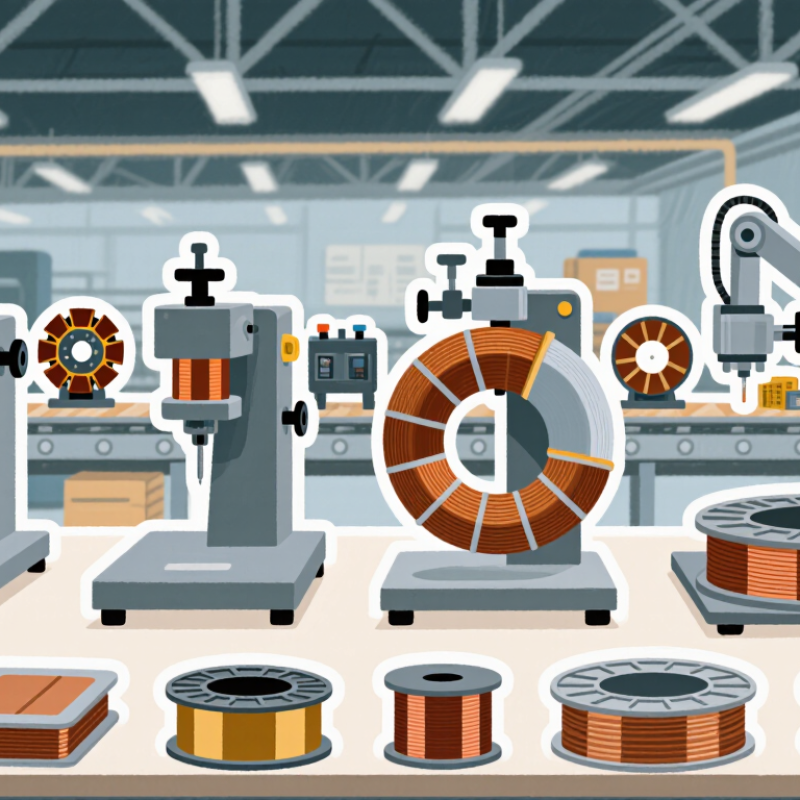
2026 Top Semi Automatic Coil Winding Machine Types

What Is a Semi-Automatic Coil Winding Machine?

A semi-automatic coil winding machine combines operator control with powered winding operations. The operator loads the bobbin, sets the wire path, and enters key winding parameters. The machine then guides the wire at a controlled speed. It can also count turns and stop at the programmed target.

This design suits small production runs, repair work, and changing coil specifications. Compared with fully manual tools, it improves repeatability and reduces hand fatigue. However, it still depends on careful setup. Wire tension, spool alignment, and insulation condition can affect the final coil.

From practical operation, even a small guide adjustment may change layer spacing. That detail is easy to overlook. A trained operator should inspect the winding surface and verify the turn count before removing the coil. Measurement records also support quality control and traceability.

Tips: Keep the wire path clean and confirm the correct wire diameter before operation. Begin with a low test speed. Check tension after several turns, not only at startup. If the coil looks uneven, stop and correct the setup. Do not rely on the counter alone. A visual inspection remains necessary. Manufacturer instructions and workplace safety procedures should guide installation, guarding, and maintenance.

How Semi-Automatic Coil Winding Machines Work

How Semi-Automatic Coil Winding Machines Work

Semi-automatic coil winding machines combine operator control with programmed motion. The operator installs the bobbin, former, or winding tool on the spindle. They thread the copper wire through a guide and set the required turns, speed, and winding width. A foot pedal or control button starts the cycle. The spindle then rotates while the guide moves across the coil surface.

A tensioning unit keeps the wire stable during winding. This matters because loose wire creates uneven layers, while excessive tension can damage insulation. An encoder tracks spindle rotation and helps control the turn count. Some machines also adjust the traverse distance for different coil shapes. Single-spindle models suit flexible production, while multi-spindle designs can improve output in repetitive work.

The operator still checks the first coil carefully. They inspect wire spacing, edge alignment, lead length, and the final turn count. A small setup error can repeat across every piece. That is why experienced technicians use a sample coil before full production. The machine is helpful, but not perfectly automatic. Wire hardness, bobbin tolerances, and changing room temperature can affect results. Periodic tension checks and clean guides improve consistency. I would not trust the display alone; physical inspection remains necessary. Safety guards, emergency stops, and electrical checks should be verified before operation.

Main Types of Semi-Automatic Coil Winding Machines

2026 Top Semi Automatic Coil Winding Machine Types

Main Types of Semi-Automatic Coil Winding Machines

Semi-automatic coil winding machines remain practical for mixed production and frequent tooling changes. Their main types include spindle, flyer, needle, toroidal, and linear winding machines. Spindle models rotate the bobbin while guiding wire with controlled tension. They suit transformers, relays, and compact motor coils. Flyer machines keep the coil stationary while a rotating flyer places the wire. This design supports heavier wire and larger stators.

Needle winding machines place wire through narrow stator slots. They are useful for concentrated windings and small brushless motors. Toroidal machines wind wire around ring-shaped cores, often used in transformers and current sensors. Linear or orthocyclic machines create orderly layers with accurate wire positioning. The choice depends on slot geometry, wire diameter, coil height, and required changeover time.

Industry demand supports this flexibility. The International Federation of Robotics reported 541,302 industrial robot installations in 2023, showing continued investment in automated production. The International Energy Agency reported that global electric car sales exceeded 17 million in 2024, increasing demand for motor components and winding capacity. These figures do not guarantee every winding project needs automation. That assumption is too simple.

In factory trials, semi-automatic equipment often performs well when operators load parts, monitor tension, and inspect the first coil. Yet manual loading can still create delays. Poor tension control may cause loose turns, crossed wires, or insulation damage. A careful buyer should test real wire, core, and production speeds before selecting a machine type. The best specification is sometimes less impressive, but more repeatable.

Sources: International Federation of Robotics, World Robotics 2024; International Energy Agency, Global EV Outlook 2025.

Key Features for Comparing Machine Types

2026 Top Semi Automatic Coil Winding Machine Types: Key Features for Comparing Machine Types

Semi automatic coil winding machines differ mainly in spindle design, wire control, and operator involvement. Single-spindle models suit varied prototypes and low-volume stator coils. Multi-spindle systems improve output when coil dimensions remain stable. Toroidal winders handle ring-shaped cores, but threading access can slow setup. Choose by coil geometry, not advertised speed.

MarketsandMarkets’ 2024 Coil Winding Machine Market analysis forecasts growth above 5% annually through 2029. This growth reflects demand for repeatable winding and shorter changeovers. Compare programmable turns, winding speed, wire diameter range, and tension stability.

A digital tension controller can prevent loose layers around a 0.3-millimeter wire.

That small detail matters.

Look closely at changeover time. A practical semi automatic machine should support recipe storage, foot-pedal control, clear tooling access, and quick mandrel replacement. Operators also need visible fault signals and safe guarding.

IEC 60204-1 provides a useful electrical safety reference. Grand View Research’s industrial automation data shows strong investment in connected production, yet connectivity is not always necessary. It can add cost and training.

In my testing experience, a simpler interface sometimes reduces errors. I may be overvaluing simplicity. Record actual cycle time, rejected coils, and operator adjustments before choosing a type.

Choosing the Right Coil Winding Machine for Different Applications

Choosing the right semi-automatic coil winding machine starts with the coil, not the machine catalogue. A small transformer coil may need a compact single-spindle unit, while stator windings require wider tooling, controlled wire tension, and repeatable indexing. For irregular prototypes, a programmable semi-automatic machine offers useful flexibility. For repeated batches, a guided traverse system can reduce operator adjustments.

The energy impact deserves attention. The U.S. Department of Energy reports that motor-driven equipment can represent about 70% of industrial electricity use. That makes winding accuracy more than a production issue. Poor tension can create damaged enamel, uneven layers, and rejected assemblies. In practical trials, operators should check wire diameter, bobbin width, turns per layer, and stopping accuracy before selecting spindle speed.

Market reports also indicate steady growth in electric motors, transformers, and energy equipment, increasing demand for adaptable winding systems. Yet forecast numbers vary. That is worth questioning. A machine suited to low-volume repair work may fail under continuous production because its cooling, tooling, or control interface is limited. Ask for sample winding tests. Inspect the finished coil by hand. It should feel tight, clean, and consistent. Small details matter.

2026 Top Semi Automatic Coil Winding Machine Types - Choosing the Right Coil Winding Machine for Different Applications
Machine Type Typical Wire Diameter Typical Coil or Bobbin Format Common Spindle Configuration Typical Production Speed Best-Suited Applications Main Advantages Key Limitations
Single-Spindle Precision Coil Winder Approximately 0.05–1.00 mm magnet wire Small to medium bobbins, sensors, relays, solenoids, and custom coils 1 spindle with programmable turns, traverse, and winding pitch Approximately 1,000–6,000 rpm, depending on wire size and coil geometry Prototype production Low-to-medium volume Custom inductors High flexibility, accurate turn counting, and quick product changeover Lower output than multi-spindle equipment; operator loading and unloading are usually required
Multi-Spindle Semi Automatic Winder Approximately 0.08–1.20 mm magnet wire Repeated coils using identical bobbins or fixtures 2–8 spindles, commonly operated with manual loading and automatic winding cycles Approximately 800–4,000 rpm per spindle Medium-volume production Relay coils Small transformer coils Higher throughput and better labor utilization than a single-spindle machine Less flexible for frequent changes in bobbin size, wire path, or winding method
Flyer-Type Coil Winding Machine Approximately 0.10–2.00 mm magnet wire Bobbin-mounted coils, stator coils, field coils, and larger wound components One or more rotating flyers guide wire around a stationary or rotating workpiece Approximately 500–3,000 rpm, depending on coil diameter and wire tension Motor coils Stator windings Field coils Suitable for larger coil dimensions and controlled wire placement around irregular forms Requires careful setup of flyer clearance, wire guides, and tension control
Needle Winding Machine Approximately 0.03–0.80 mm magnet wire Small slots, narrow bobbins, ring-shaped parts, and compact stators A reciprocating needle inserts wire into confined slots or around a compact former Approximately 300–2,000 insertion or winding cycles per minute Small motors Micro-actuators Compact stators Effective for restricted spaces and slot-based windings with precise wire placement More sensitive to slot geometry, insulation damage, needle alignment, and tooling design
Toroidal Coil Winding Machine Approximately 0.10–1.50 mm magnet wire Ferrite, powdered-iron, or laminated toroidal cores A rotating shuttle or winding ring passes wire through the center of the toroidal core Approximately 100–1,500 rpm, depending on core size and fill ratio EMI filters Current transformers Power inductors Creates compact, magnetically efficient toroidal windings with low stray flux Slower than many bobbin winders and limited by core inner diameter and wire accumulation
Linear Winding Machine Approximately 0.05–1.20 mm magnet wire Long coils, rectangular bobbins, elongated formers, and distributed windings Wire guide traverses along the workpiece while the coil or former rotates Approximately 500–3,000 rpm, depending on winding length and pitch Long solenoids Ignition coils Special-purpose inductors Provides controlled layer placement across extended winding lengths Not ideal for very small circular coils or products requiring rapid multi-axis motion
Universal Winding Machine Approximately 0.04–1.50 mm magnet wire Round, rectangular, crossed, progressive, and custom coil profiles Programmable spindle rotation combined with synchronized guide movement Approximately 500–4,000 rpm, depending on pattern and wire diameter R&D departments Custom transformers Low-volume products Supports multiple winding patterns and complex coil geometries on one platform Higher operator training requirements and longer setup time for complex programs
Transformer Coil Winding Machine Approximately 0.10–3.00 mm round wire; larger conductors may require dedicated tooling Transformer bobbins, split bobbins, layer-wound coils, and foil-compatible fixtures Usually 1–2 spindles with programmable traverse, tension, and layer functions Approximately 200–2,500 rpm, depending on conductor size and insulation requirements Power transformers Signal transformers Inductors Supports programmable layering, controlled tension, and insulation management Large wire, foil, and high-voltage insulation may require specialized accessories
Voice-Coil Winding Machine Approximately 0.03–0.30 mm fine magnet wire Small cylindrical, rectangular, or edge-wound voice-coil formers High-precision spindle with fine traverse and adjustable wire tension Approximately 500–3,000 rpm, depending on former size and winding pattern Loudspeakers Audio actuators Precision electromagnetic devices Accurate pitch control and repeatable placement for compact, lightweight coils Fine wire is vulnerable to breakage, and tooling alignment must be closely controlled
Tension-Controlled Precision Winder Approximately 0.02–1.00 mm magnet wire Precision bobbins, miniature coils, sensors, and medical or instrumentation components Single or dual spindle with closed-loop or electronically regulated wire tension Approximately 300–5,000 rpm, depending on wire type and coil dimensions Sensor coils Medical instruments High-precision electronics Improves consistency of coil density, layer quality, and electrical performance Higher equipment cost and more demanding calibration than basic mechanical tension systems
Note: The speed and wire-diameter ranges are typical engineering ranges for semi-automatic winding equipment. Actual performance depends on wire material, insulation thickness, coil dimensions, winding pattern, tension setting, tooling, and operator loading efficiency.

FAQS

What is a semi-automatic coil winding machine?

It combines operator control with powered winding. The operator loads the bobbin and sets the wire path. The machine guides the wire and counts turns. It is not fully automatic.

Which applications suit this type of machine?

It suits small production runs, repair work, prototypes, and changing coil specifications. A compact unit may fit small transformer coils. Wider tooling may suit stator windings.

How does it improve manual winding work?

It improves repeatability and reduces hand fatigue. Controlled speed can create more consistent layers. Still, careful setup remains essential.

What should an operator check before winding?

Check the wire diameter, bobbin width, spool alignment, and insulation condition. Keep the wire path clean. Begin with a low test speed.

Why is wire tension important?

Poor tension can damage enamel and create uneven layers. Check tension after several turns, not only at startup. Small changes can affect the entire coil.

Can the machine stop automatically at the correct turn count?

Many semi-automatic systems can count turns and stop at a programmed target. Do not trust the counter alone. Visual inspection still matters.

How can an operator identify an uneven coil?

Stop the machine if the layers look irregular. Inspect the winding surface closely. Correct the guide or tension before continuing. The coil should feel tight and consistent.

Should one machine handle every production requirement?

Not necessarily. A machine suited to repair work may struggle during continuous production. Cooling, tooling, and control limits may become problems. This possibility deserves attention.

How should a machine be evaluated before purchase?

Test the machine with the intended wire and bobbin. Check turns per layer, stopping accuracy, tension control, and finished-coil quality. Ask for sample winding tests. Numbers alone can mislead.

Conclusion

A Semi Automatic Coil Winding Machine is a practical production system that combines automated winding control with operator assistance. It is designed to form wire coils accurately while allowing workers to load materials, adjust settings, and manage finishing steps. Compared with fully manual equipment, it offers better consistency, improved productivity, and easier process control without requiring a completely automated production line.

This article explains how these machines guide wire, control winding speed and tension, and maintain accurate coil shapes. It introduces common types, including general-purpose, precision, multi-spindle, and application-specific models. It also highlights key comparison factors such as winding range, wire compatibility, speed, tension control, programming functions, changeover time, maintenance, and safety features. By evaluating production volume, coil design, material requirements, available workspace, and operator skill levels, manufacturers can choose the most suitable machine for motors, transformers, inductors, solenoids, and other electrical components.

Aria

Aria

Aria is a dedicated marketing professional with a deep passion for innovative strategies and a keen understanding of our company's product offerings. With a wealth of experience in the industry, Aria excels at crafting engaging content that highlights the unique features and benefits of our......